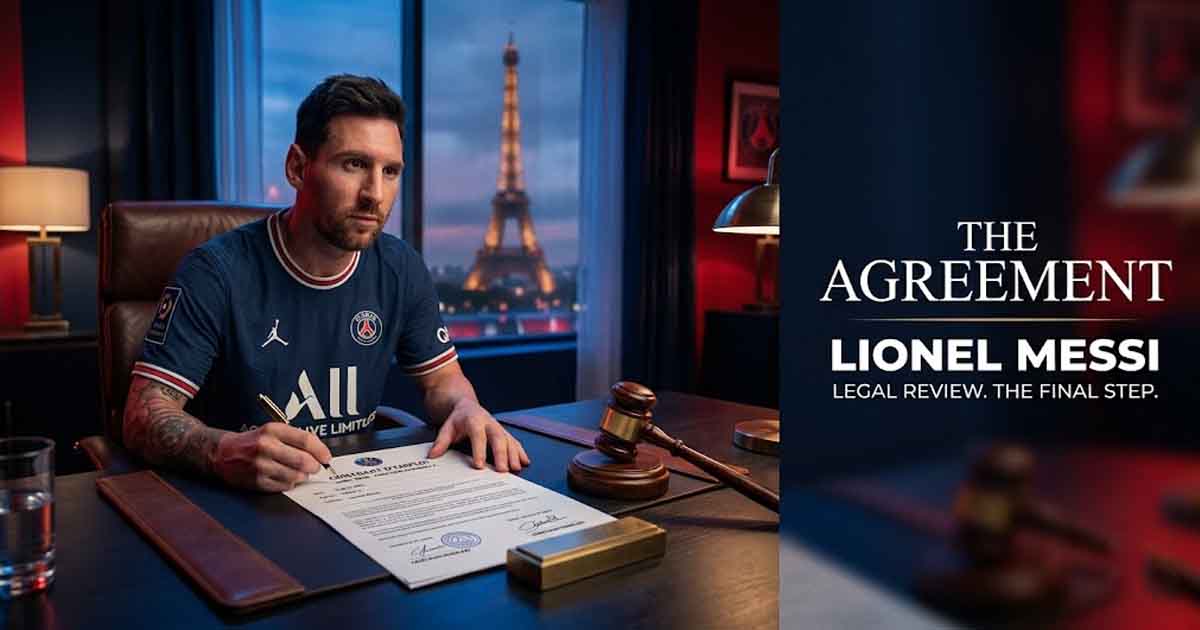
When Lionel Messi joined Paris Saint-Germain in the summer of 2021, the football world was transfixed by the emotional scenes of his tearful farewell to Barcelona and his subsequent arrival in Paris. What received far less attention was the extraordinary legal and contractual complexity of the deal that brought him there — a document that, by most accounts, ran to hundreds of pages and contained provisions that went far beyond standard player contracts in European football.
This analysis examines the key legal dimensions of the Messi-PSG arrangement, drawing on publicly available information, legal commentary from sports law specialists, and the subsequent dispute that emerged when Messi ultimately left the club without the clean break either party had hoped for.
The Basic Contract Structure
Messi's PSG contract was reported to be a two-year deal with an option for a third year, covering the 2021-22 and 2022-23 seasons. The base salary was widely reported at approximately €25 million net per year — a figure that, while substantial, was significantly below what Messi had been earning at Barcelona before the club's financial difficulties forced his departure.
However, the base salary tells only part of the story. PSG's contract with Messi was structured to include a significant signing bonus paid upfront — reported figures range from €25 million to €30 million — and a package of performance-related bonuses tied to Ligue 1 title wins, Champions League progression, and individual award achievements including the Ballon d'Or.
The Image Rights Clause
One of the most legally significant elements of any top-level athlete contract is the image rights provision, and Messi's deal was reported to contain particularly favorable terms in this regard. Image rights — the commercial value of an athlete's name, likeness, and personal brand — are typically negotiated as a percentage of the overall contract value or as a separate standalone payment.
For Messi, whose image rights portfolio includes partnerships with brands across multiple continents, the image rights component of the PSG deal was reported to be structured through a separate company arrangement that allowed for more favorable tax treatment under French law. The legality and optimization of such structures is a standard tool in top-level sports contract drafting, but one that requires sophisticated legal expertise to execute correctly.
Performance Bonuses and Their Legal Implications
Performance bonuses in professional sports contracts create their own category of legal complexity. When a bonus condition is met — such as winning a specified trophy or achieving a scoring milestone — the obligation to pay becomes legally enforceable. When there is a dispute about whether the condition was actually met, the matter can end up in arbitration or litigation.
Messi's PSG contract was reported to include bonuses linked to Champions League performance — a provision that became problematic when PSG failed to progress as expected in the competition during his time at the club. The extent to which bonus conditions were satisfied, waived, or disputed is not a matter of public record, but sports law practitioners have noted that such disputes are common when high-value performance bonuses are attached to team rather than individual outcomes.
The Departure and Its Legal Aftermath
Messi's departure from PSG after two seasons was not as clean as either party publicly presented. Reports emerged of tensions over the exercise of the third-year option, a disciplinary matter related to an unauthorized trip to Saudi Arabia, and disagreements over the terms of the final settlement. While no public litigation followed, the episode illustrated the legal complexity that arises when even well-drafted contracts encounter unforeseen circumstances.
Sports law specialists have observed that the lesson from the PSG contract is not that it was poorly drafted — by all accounts it was a sophisticated document — but that no contract can fully anticipate the human and sporting dynamics that will play out over the course of a multi-year relationship between a global superstar and a club operating under intense public and financial scrutiny.
Conclusion
The Messi-PSG contract serves as a masterclass in the complexity of modern elite athlete agreements. From image rights structures to performance bonus cascades, from tax optimization clauses to exit provisions, every element of a top-level sports contract requires specialist legal expertise to draft, negotiate, and enforce. For aspiring athletes and agents, understanding this complexity is an essential part of professional development in today's sports industry.

Add a Comment