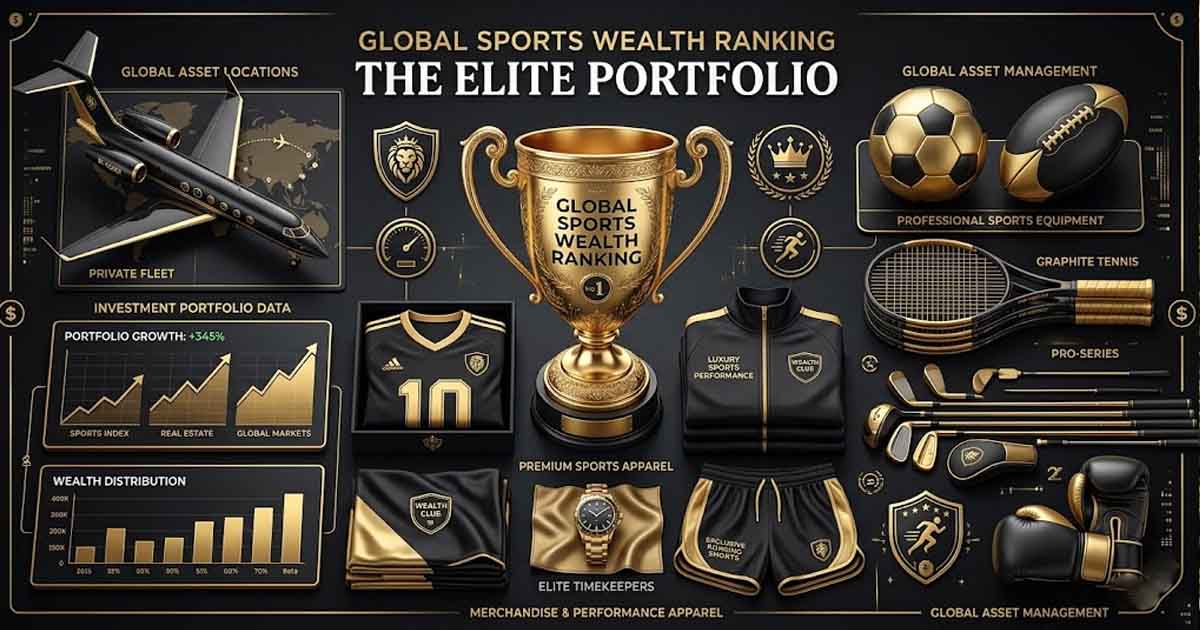
Athletic excellence generates extraordinary financial rewards in the modern sports economy. Television rights, global streaming, social media monetization, and an endorsement market that pays athletes for access to their audiences have created a class of sportspeople whose wealth exceeds anything seen in previous generations. The richest athletes alive today have accumulated not just the earnings of sport but the returns of smart investment over decades — transforming their athletic platforms into diversified financial empires.
Michael Jordan — Approximately $3.2 Billion
Michael Jordan is the wealthiest retired athlete in history, having built a fortune that dwarfs his basketball earnings through his ownership stake in the Charlotte Hornets (sold in 2023 at significant profit), his extraordinary Jordan Brand royalty income from Nike, and a diversified investment portfolio assembled over three decades. Jordan's financial story is the paradigm case for how an athlete can leverage their platform into generational wealth — his children and grandchildren will benefit from decisions made on a basketball court in the 1980s.
Cristiano Ronaldo — Approximately $600-700 Million
Ronaldo's wealth, assembled across career earnings exceeding $1 billion before tax and augmented by the CR7 brand empire, places him among the wealthiest active athletes in any sport. His spending reflects the priorities of someone who simultaneously uses wealth for genuine enjoyment — the cars, the properties, the private aviation — and as a business investment vehicle through the hotel chain and other commercial enterprises.
Lionel Messi — Approximately $400-500 Million
Messi's more understated public profile belies a wealth that approaches Ronaldo's in absolute terms. His Real estate in Rosario, Ibiza, and Miami, his Ferrari collection, and his investment activities managed through private family offices reflect an approach to wealth that is less publicly visible than Ronaldo's but no less substantial.
LeBron James — Approximately $1.2 Billion
LeBron crossed the billion-dollar threshold in 2022 through the combination of his SpingHill Company valuation, his Nike lifetime deal, his Liverpool FC ownership stake, his Blaze Pizza equity, and his basketball earnings. His spending priorities — documented through his public philanthropic activities including the I Promise School in Akron and his college scholarship fund — reflect a use of wealth that extends beyond personal consumption to community investment of substantial scale.
Tiger Woods — Approximately $1.7 Billion
Tiger Woods accumulated approximately $1.7 billion across golf prize money, endorsement deals, and his golf course design and equipment businesses. His spending in the post-playing phase has focused on his TGR Foundation education programs, his TGR Design golf course design business, and his PopStroke entertainment golf venues — a portfolio that converts the platform of his athletic career into ongoing commercial activities.
What the Richest Athletes Share
Looking across the wealthiest athletes in history, several commonalities emerge. Almost without exception, they achieved their greatest post-playing wealth not from playing but from what they built around their playing platforms — brands, businesses, equity stakes, and investment portfolios that continued generating returns long after their athletic careers ended. They hired expert advisors rather than managing their finances personally. And they made at least one transformative business decision — a deal, a partnership, or an investment — that multiplied their wealth beyond what sport alone could generate. These are not accidents. They are strategic choices that any athlete with sufficient platform can potentially replicate.


Add a Comment