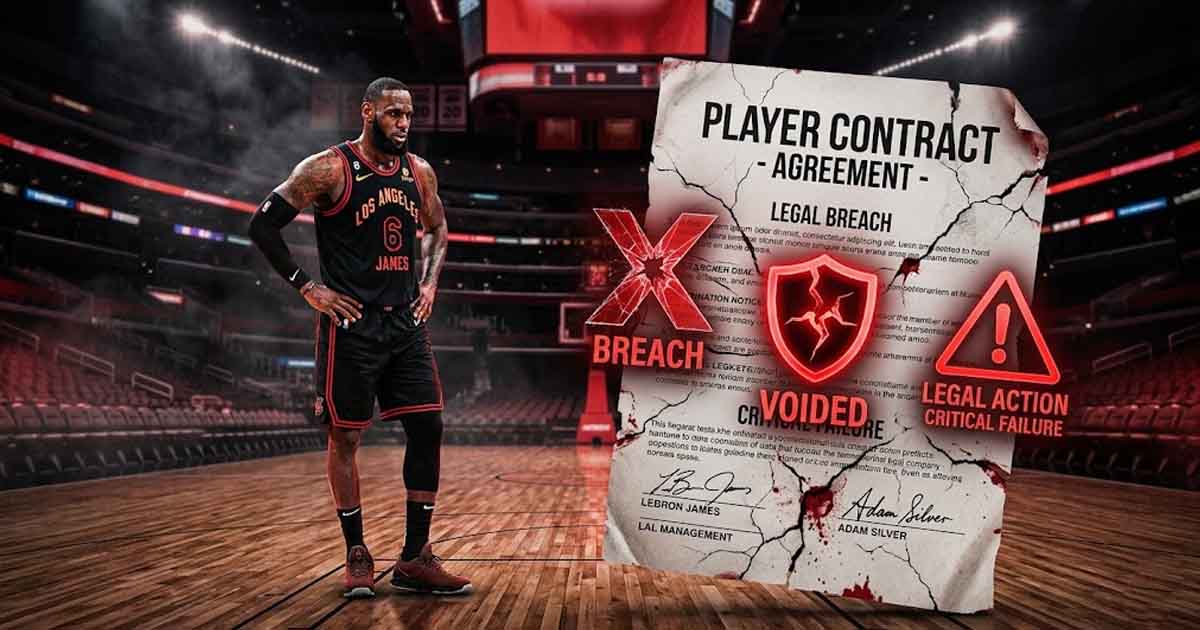
An NBA player contract is one of the most complex legal documents in professional sport. Running to dozens of pages, it governs not just the player's on-court obligations but enormous swaths of their personal and professional life — including what businesses they can invest in, what physical activities they can engage in, what they can say on social media, and how they must behave in public as representatives of their franchise.
When players violate these clauses — intentionally or otherwise — the legal and financial consequences can be severe. Understanding what the most common violations are, how they are handled contractually, and what legal remedies clubs have available is essential context for understanding how the NBA's labor market actually functions.
The Morals Clause
Every major professional sports contract contains some version of a morals clause — a provision allowing the team to terminate or modify the contract if the player engages in conduct that brings the club, the league, or the sport into disrepute. The exact language varies by contract, but the concept is consistent: the player's off-court behavior is contractually regulated, and severe misconduct can void the entire agreement.
The challenge with morals clauses is enforcement. Defining what conduct crosses the threshold is inherently subjective, and players have successfully challenged morals clause terminations by arguing that the relevant conduct did not meet the contractual standard. Agent representation and the collective bargaining agreement between the NBA and the Players Association both play important roles in constraining how broadly teams can apply these clauses.
No-Trade and No-Cut Clauses
Players with sufficient leverage sometimes negotiate no-trade clauses — provisions preventing the team from trading them without their consent — and no-cut guarantees — provisions ensuring they are paid even if the team decides to release them. These clauses, when violated by the team, give the player clear legal remedies including breach of contract claims for the full guaranteed amount.
The interaction between no-trade clauses and a team's desire to rebuild or restructure their roster has generated numerous legal disputes. Teams sometimes argue that changed circumstances — such as the player suffering a serious injury — affect the application of no-trade protections. Players and their agents vigorously contest such arguments, and the CBA's grievance arbitration system is the typical forum for resolving these disputes.
Outside Business Activity Restrictions
NBA contracts routinely restrict players from engaging in high-risk outside business or recreational activities. Motorcycling, snowboarding, recreational basketball, and certain extreme sports are commonly prohibited. The rationale is straightforward: the team is paying for the player's athletic services, and any injury sustained in a prohibited activity during the contract period represents a breach that may affect the team's insurance coverage and their ability to recover salary paid during an injury absence.
The most famous violation of this type in recent NBA history was Vin Baker's career, in which substance abuse — also a contract violation — shortened what should have been a Hall of Fame career. More recently, Kawhi Leonard's hand injury suffered while playing recreational basketball without team authorization raised questions about contract compliance that were never publicly resolved.
Social Media and Public Statement Violations
Modern NBA contracts increasingly include provisions governing player conduct on social media platforms. While the First Amendment generally protects individual speech, private contractual agreements can restrict what players say in their professional capacity as representatives of the franchise. Anti-disparagement clauses prevent players from publicly criticizing coaches, management, teammates, or the organization. Confidentiality provisions restrict disclosure of internal team matters. Commercial restriction clauses prevent endorsement or promotion of competing brands without team consent.
The enforcement of these provisions is complicated by the public nature of social media and the difficulty of drawing the line between a player speaking as a private citizen and as a league representative. The NBA Players Association has negotiated protections for political and social speech specifically, but commercial and organizational conduct restrictions remain broadly in force.
The Grievance Arbitration System
Contract violations in the NBA are governed by a sophisticated internal dispute resolution system established under the collective bargaining agreement. Disputes that cannot be resolved between the team and player go to a grievance arbitration process, presided over by an independent arbitrator agreed jointly by the NBA and the NBPA. The arbitrator's decision is final and binding, with limited grounds for challenge in the federal courts.
This system has handled hundreds of contract dispute cases over the decades of the CBA's existence, developing a substantial body of precedent that guides how future disputes are approached. Athletes and agents who understand this precedent are better positioned to both draft favorable contract terms and enforce those terms effectively when disputes arise.



Add a Comment