
Neymar Jr. is one of the most naturally gifted footballers ever to play the game — a player whose technical skill, creativity, and ambition have consistently placed him in conversations about the greatest of his generation. He is also, unfortunately, one of the most injury-prone elite footballers of the modern era, a player whose physical fragility has defined — and repeatedly interrupted — what should have been an unbroken ascent to the very top of the sport.
The story of Neymar's relationship with injury is a compelling and ultimately instructive medical narrative. It involves multiple serious fractures, ligament reconstructions, muscle tears, and the psychological toll of spending months at a time in rehabilitation while the sporting world moves forward without him.
The World Cup 2014 Fracture: When Brazil Stopped
The most dramatically public of Neymar's injuries occurred during the 2014 FIFA World Cup, which Brazil was hosting with Neymar as its essential talisman. In the quarter-final against Colombia, Juan Camilo Zuniga's knee struck Neymar in the lower back during a challenge, fracturing his third lumbar vertebra. The injury was spinal — a category of injury that immediately raises concerns about not just athletic return, but long-term neurological health.
The fracture was a transverse process fracture rather than a full vertebral body fracture, which made the prognosis significantly more favorable. Nevertheless, Neymar was unable to continue in the tournament, and Brazil — already facing the semi-final without the suspended Thiago Silva — suffered the catastrophic 7-1 defeat to Germany that became known simply as the Mineirazo. The personal and national sporting loss intertwined in a way that made Neymar's rehabilitation as much psychological as physical.
The Metatarsal Saga at PSG
Neymar's move to Paris Saint-Germain in 2017 for a world-record €222 million was supposed to represent the final step in his emergence as the undisputed best player on earth, freed from the shadow of Lionel Messi at Barcelona. Instead, it initiated a period of recurring right foot injuries — specifically, fractures and ligament damage to the fifth metatarsal — that became the defining narrative of his time in Paris.
The fifth metatarsal is a notoriously difficult bone to rehabilitate in footballers. It bears significant loading during lateral movement and is vulnerable to stress fractures under the repetitive impact demands of the sport. Neymar suffered this injury multiple times across multiple seasons at PSG, requiring surgical intervention and extended rehabilitation periods that removed him from Champions League knockout stages with painful regularity.
The ACL: The Most Serious Chapter
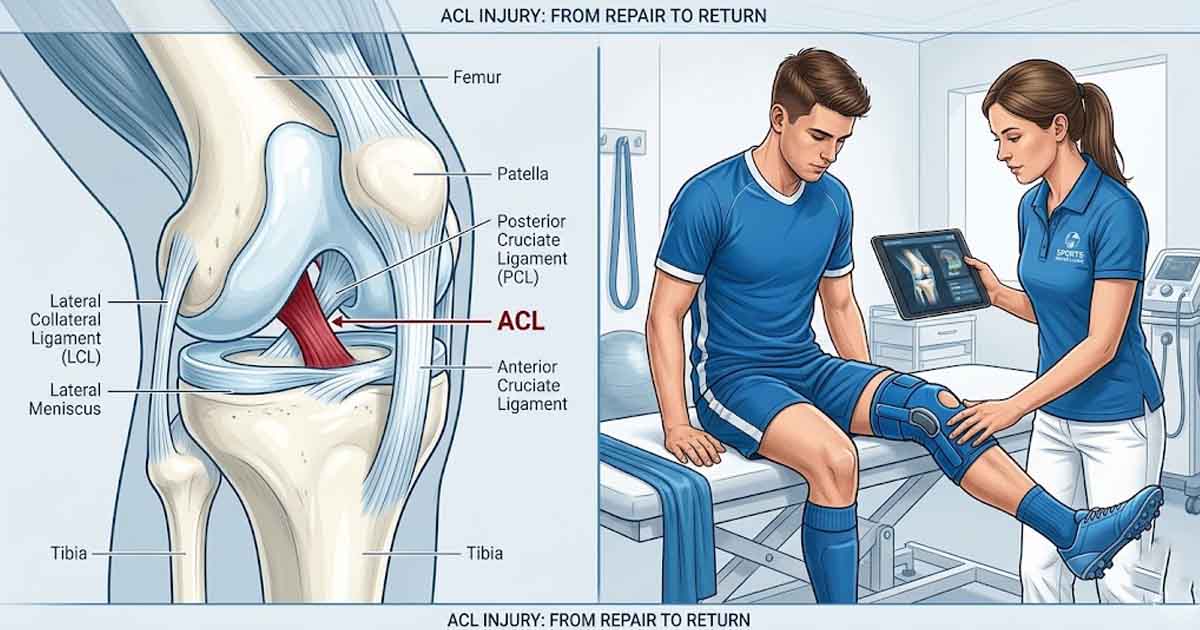
In October 2023, while playing for Brazil in a World Cup qualifier against Uruguay, Neymar suffered a complete ACL tear combined with a meniscal injury in his left knee — the most serious injury of his career. The surgery required was extensive, and the rehabilitation timeline projected was twelve months or longer, effectively ending his season at Al-Hilal and raising serious questions for the first time about whether, at 31, he would ever truly return to the level he had been at before.
The ACL injury generated enormous commentary about the cumulative physical toll of Neymar's career — the repeated injuries, the surgeries, the rehabilitation cycles, and the question of whether his playing style — characterized by rapid direction changes, sharp acceleration, and physical confrontation with defenders — was inherently incompatible with staying healthy at the highest level.
Rehabilitation and the Road Back
Neymar's rehabilitation from the ACL injury has been conducted with the support of both Al-Hilal's medical team and his personal team of physical therapists and rehabilitation specialists. The process has been slow and methodical, reflecting the complexity of the injury and the importance of ensuring that return is sustainable rather than premature.
What Neymar's injury journey ultimately teaches is that even the most gifted athletes are human — that physical vulnerability is the counterpart to physical brilliance, and that managing the body with as much care and strategy as managing the talent is the only way to sustain a long career at the highest level.







Add a Comment