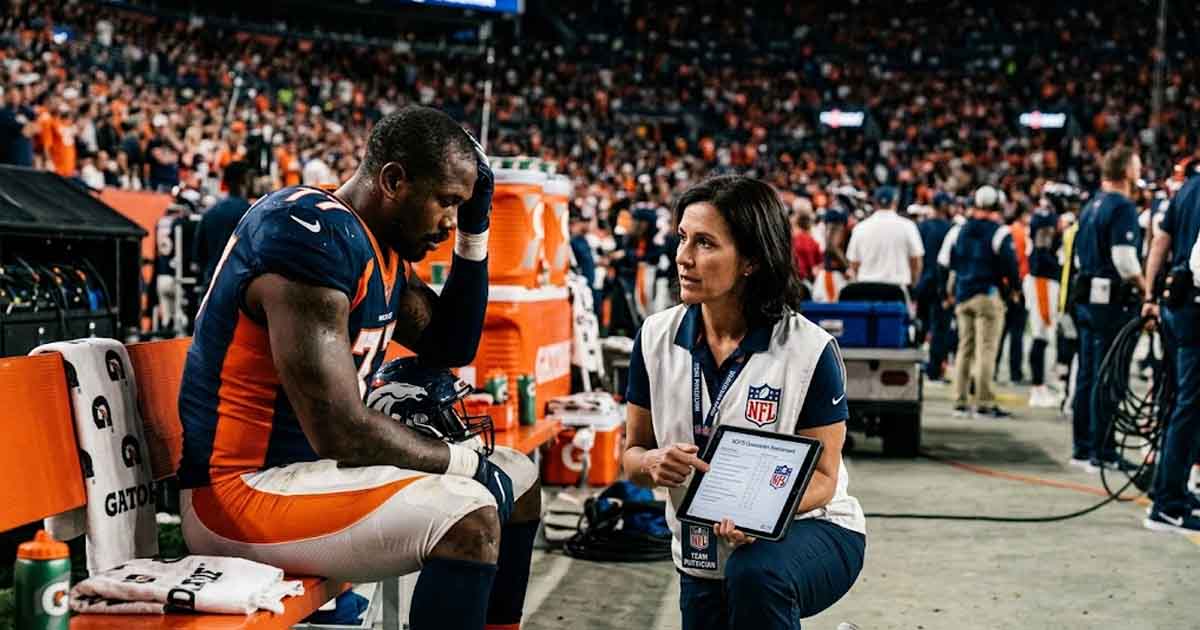
On November 2, 2023, the NFL agreed to a landmark settlement with thousands of former players who had sued the league over its handling of concussion-related traumatic brain injuries — a settlement that ultimately reached over $1 billion and forced a fundamental reassessment of how the most popular sport in America manages head injuries at every level of the game.
The settlement and the decade of litigation that preceded it transformed the NFL's approach to concussion management. From a league that once minimized the connection between repeated head impacts and long-term neurological damage, the NFL has become — at least in its official protocols — one of the more rigorous major sports leagues in the world on this issue. But critics argue that the structural incentives of the sport still work against genuine player protection, and that the science of brain injury in contact sport continues to raise questions that protocols cannot fully answer.
Current NFL Concussion Protocol
The current NFL concussion protocol was developed jointly by the NFL and the NFL Players Association and is enforced by independent neurological consultants who operate at every game independently of the team medical staff. When a player shows potential signs of concussion — including confusion, balance problems, vision disturbance, or the characteristic vacant stare known as the motor blank — they are removed from the field and taken to a designated locker room evaluation area.
The evaluation uses a standardized battery of cognitive and physical assessments to determine whether the player has suffered a concussion. If a concussion is diagnosed or cannot be ruled out, the player is prohibited from returning to play for the remainder of that game day and must complete a multi-step return-to-participation protocol before being cleared for full contact practice and competition.
The Return-to-Participation Protocol
The NFL's return-to-participation protocol involves five progressive steps, each requiring at least 24 hours and physician clearance before advancement. Step one requires the player to be asymptomatic at rest. Step two introduces light aerobic exercise. Step three adds sport-specific exercise. Step four involves controlled full contact practice. Step five is final clearance for unrestricted return to competition, which requires sign-off from both the club physician and an independent neurological consultant.
This protocol represents a significant advancement from the pre-2009 era when many players returned to play on the same day they suffered a concussion, sometimes without any formal evaluation. The culture of playing through injuries — deeply embedded in NFL locker room culture — has not been eliminated by the protocol, but the structural safeguards have made it considerably more difficult for players or coaches to circumvent the medical process.
Chronic Traumatic Encephalopathy: The Unresolved Question
The protocol addresses acute concussion management with relative effectiveness. What it cannot address is the long-term question of chronic traumatic encephalopathy — the progressive neurodegenerative disease associated with repetitive brain trauma — which has been found in the brains of numerous former NFL players at autopsy. CTE cannot be definitively diagnosed during life, cannot currently be prevented by any protocol that still allows full-contact football to be played, and may be caused not just by concussions but by the subconcussive impacts that occur on nearly every play in a contact sport.
This is the fundamental unresolved tension in NFL concussion management: the protocols protect players from the consequences of diagnosed concussions, but the sport itself may cause cumulative brain damage that no amount of protocol can prevent while the game retains its essential physical character. It is a question that the NFL, the medical community, and ultimately society must grapple with as the long-term research on contact sport and brain health continues to develop.








Add a Comment