The sports recovery market in 2026 is worth tens of billions of dollars globally — compression garments, ice baths, infrared saunas, percussion therapy devices, cryotherapy chambers, hyperbaric oxygen, NormaTec boots, red light therapy, and hundreds of supplements all marketed as performance-enhancing recovery tools. Some of these products have genuine evidence support. Many have thin or absent evidence bases, maintained commercially by athlete endorsements, social media visibility, and the difficulty of distinguishing placebo effects from genuine physiological recovery benefits in practical settings. This matters, because money and time spent on ineffective recovery tools is money and time not spent on the tools that actually work.
Sleep: The Highest Evidence Recovery Intervention
The intervention with the strongest evidence base for athletic recovery is not a product and costs nothing: sleep quality and duration. Research on sleep deprivation and athletic performance consistently shows that even modest sleep restriction (6 hours vs. 8 hours) produces measurable performance decrements: reduced reaction time, impaired decision-making, decreased peak power output, reduced time to exhaustion, and elevated perceived exertion at equivalent intensities. Conversely, sleep extension — ensuring 9 hours of sleep opportunity for athletes who are habitually sleep-restricted — produces performance improvements equivalent in magnitude to several months of structured training in some studies.
The practical priority this creates for recovery optimisation is clear: if an athlete is sleeping fewer than 7-8 hours per night, addressing that deficit should be the first recovery intervention, before any product purchase or treatment protocol. The marginal return from an additional hour of sleep for a sleep-restricted athlete is greater than the marginal return from any recovery modality currently marketed commercially. This hierarchy — sleep first, everything else second — is not how the recovery industry presents the landscape, but it is what the evidence supports.
Cold Water Immersion: What It Does and What It Costs
Cold water immersion (CWI) — ice baths, cold plunge pools — is one of the most extensively researched recovery modalities and produces genuinely complex evidence. CWI consistently reduces delayed onset muscle soreness (DOMS) and subjective fatigue perception in the days following strenuous exercise — the perceptual recovery benefit is real and reliable. CWI also reduces some inflammatory markers associated with exercise-induced muscle damage.
The complication is that the inflammatory response CWI suppresses is not purely detrimental — it is part of the adaptation signalling cascade that drives muscle protein synthesis and long-term hypertrophic adaptation. Multiple studies have demonstrated that regular post-training CWI attenuates hypertrophic adaptation compared to passive recovery, with the magnitude of the attenuation varying by study design and CWI timing. The practical implication is that CWI is most appropriate for accelerating functional recovery between competitions or intense training sessions where the priority is next-session performance rather than long-term adaptation — and is less appropriate as a routine post-training recovery tool during adaptation-focused training phases where building maximal training-induced stimulus is the priority.
Compression Garments: Modest Benefits, Clear Evidence
Compression garments — graduated compression tights, socks, and sleeves worn during exercise or recovery — have a more robust evidence base than their marketing often suggests. Meta-analyses find modest but consistent benefits for DOMS reduction and recovery of performance markers in the 24-48 hours following strenuous exercise. The mechanism involves improved venous return, reduced muscle oscillation during exercise, and possibly proprioceptive enhancement. The benefits are real but moderate in magnitude, and the garment quality significantly affects the compression gradient and therefore the benefit. Well-designed graduated compression garments produce measurable benefits; loosely fitting athletic wear marketed as compression but providing minimal measured compression does not.
The Expensive Modalities: Cryotherapy, Hyperbaric Oxygen, and Infrared
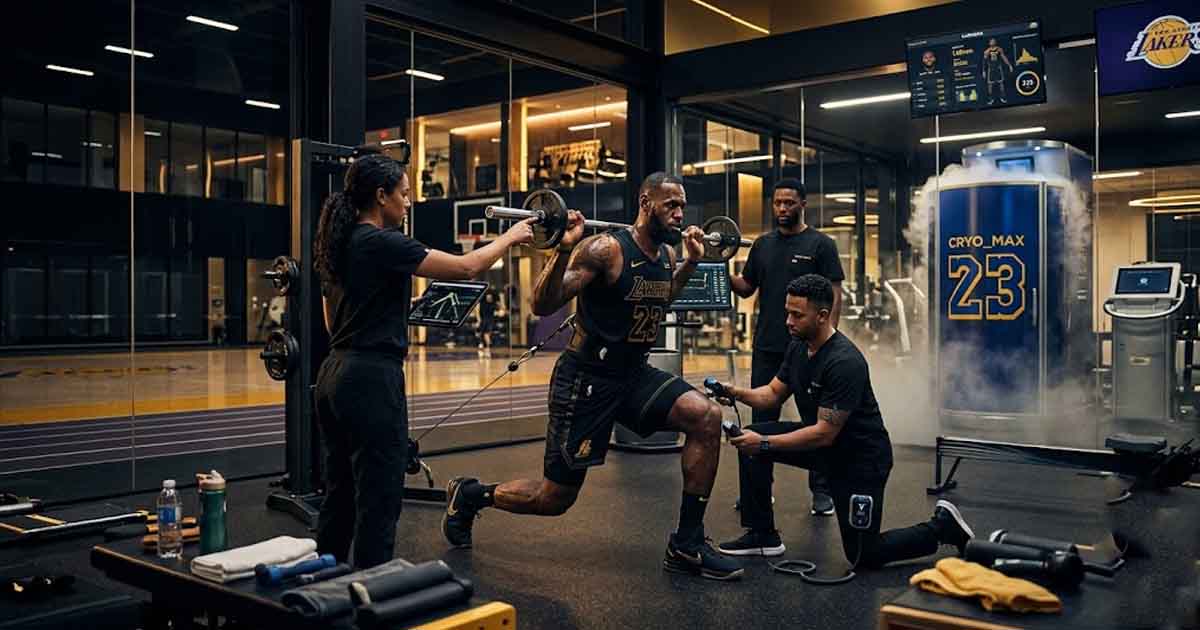
Whole-body cryotherapy (WBC) — brief exposure to extremely cold air in a cryotherapy chamber — has been extensively researched following its commercial expansion into sports recovery. The evidence is generally less impressive than the price point implies: meta-analyses comparing WBC to CWI consistently find comparable or inferior perceptual recovery benefits from WBC despite significantly higher costs. The advantage of WBC — avoiding water immersion — is practical rather than physiological. For athletes who have access to both, cold water immersion delivers comparable or better evidence-supported recovery benefits at substantially lower cost.
Hyperbaric oxygen therapy (HBO) — breathing 100% oxygen at above-atmospheric pressure — has legitimate clinical applications in wound healing and decompression sickness treatment. For sports recovery, the evidence is sparse and methodologically weak. The few controlled studies in athletic populations show inconsistent results across different sports and recovery parameters. The use of HBO for athletic recovery is supported primarily by anecdote and athlete testimonial rather than controlled clinical evidence, and the cost per session is high enough that the poor evidence base warrants careful consideration before investment.
Percussion therapy devices (massage guns) — which have become perhaps the most widely adopted recovery product among recreational athletes — have a more practical evidence base than the more exotic modalities. Research shows percussion therapy reduces DOMS and improves ROM in the short term following application, comparable to traditional manual massage. The mechanism is tissue temperature increase, myofascial release, and blood flow promotion — similar to conventional massage. The practical advantage is accessibility: a device the athlete can self-apply at home without booking appointments or paying therapist fees. For athletes who use it correctly on the appropriate tissues, percussion therapy provides genuine value at a reasonable cost point — one of the clearer positive conclusions from the recovery product evidence landscape.


Add a Comment