The modern professional football club is as much a data operation as a sporting one. Embedded in the training sessions, the medical screenings, the tactical preparations, and even the equipment worn by players is a constantly expanding ecosystem of technology that generates, processes, and applies data to every dimension of performance. The transformation has been so rapid that clubs without these capabilities are now considered to be operating at a genuine competitive disadvantage.
This exploration of football's technology revolution examines the key tools in use across top clubs, explaining what each technology measures, how the data is applied in practice, and what the next generation of football technology is likely to look like.
GPS Tracking: The Foundational Technology
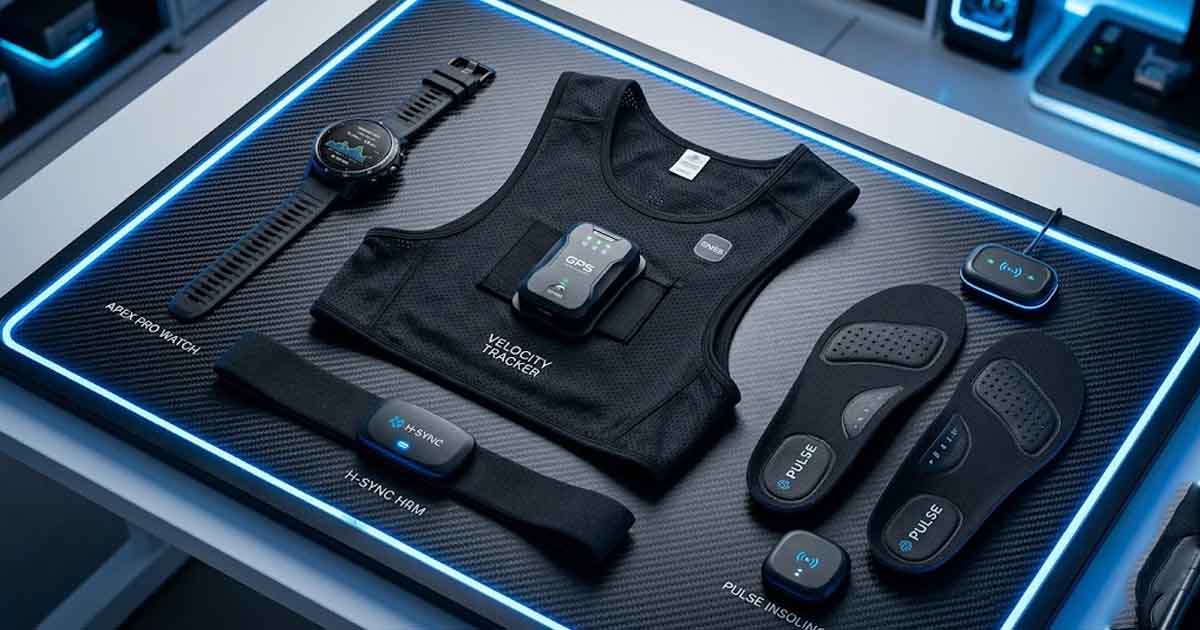
GPS tracking of player movements during training and matches has been the foundational technology of football's data revolution. Every top club in every major league now equips players with GPS pods — housed in tight-fitting vests worn beneath the training kit — that continuously track position, distance covered, speed at every moment of the session, and the number and intensity of accelerations and decelerations.
The data from a single GPS session generates tens of thousands of data points per player. Key outputs include total distance covered, high-speed running distance (typically defined as distance covered above 20 km/h or above 25 km/h depending on the club's methodological choices), sprint count, peak speed, and the Player Load metric — a composite measure of total mechanical stress on the body that integrates accelerations across all three spatial dimensions.
Heat Maps: Visualizing the Game
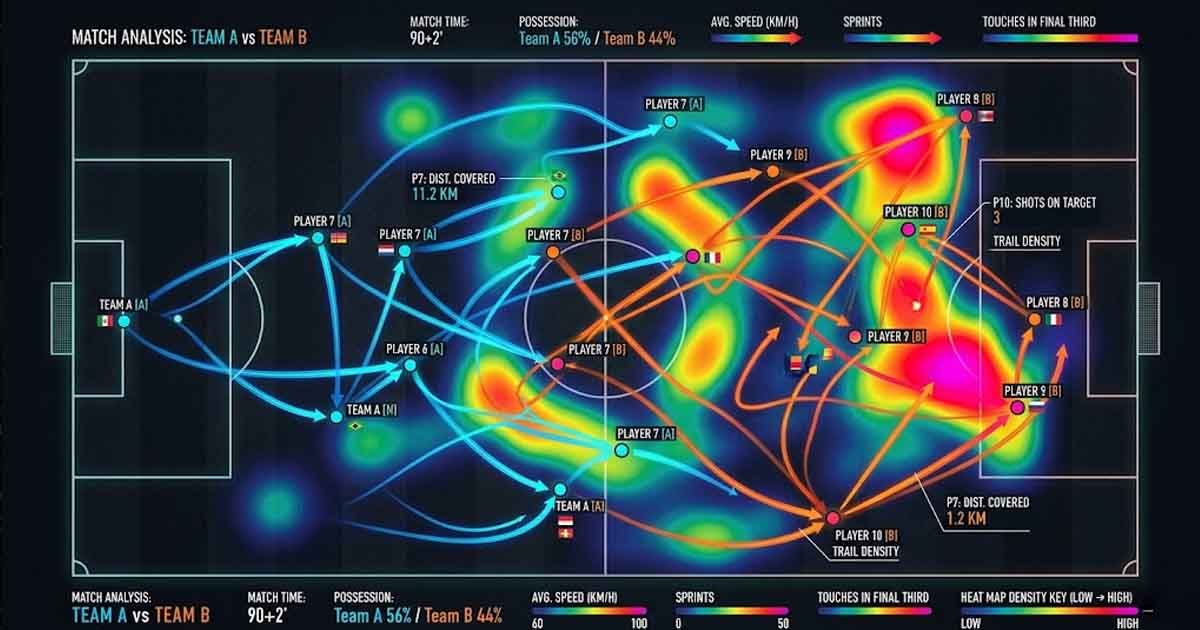
Heat maps — visual representations of where players spend time on the pitch during matches — are among the most immediately intuitive outputs of GPS tracking technology. By coloring areas of the pitch according to time spent in each zone, heat maps make visible the spatial patterns of individual and collective play that are difficult to perceive from watching footage in real time.
Coaches use heat maps to assess whether players are fulfilling their positional assignments, identify the spaces that specific teams systematically create or leave exposed, and compare a player's positional behavior before and after tactical instruction. Opposition analysis departments use heat maps of upcoming opponents to identify the spatial tendencies that can be exploited tactically.
Smart Boots and Instrumented Equipment
The instrumented football boot — a boot containing sensors that measure ball contact characteristics, kicking force, foot strike patterns, and stride mechanics — represents the frontier of individual performance monitoring technology. Several manufacturers including Adidas and Statsports have explored boots with embedded sensors, and while fully instrumented smart boots are not yet standard issue at top clubs, the technology exists and its development is accelerating.
The data that smart boots could generate — including kicking velocity, ball contact position, ankle mechanics during striking, and foot strike pattern during high-speed running — would provide biomechanical insights into individual technique that are currently only obtainable through dedicated laboratory assessments. The integration of this data with GPS tracking and opposition tactical analysis would enable a level of performance personalization that exceeds anything currently possible.
Video Analysis and Computer Vision
Video analysis has been part of football for decades, but the application of computer vision AI — machine learning systems that automatically analyze video footage and extract tracking data without human annotation — has transformed both the speed and the depth of video analysis at top clubs. Systems like Second Spectrum and Statsbomb 360 generate detailed spatial data from broadcast footage, enabling clubs without access to official tracking systems to build sophisticated data sets from match video alone.
The combination of video analysis, GPS tracking, and physiological monitoring creates a comprehensive picture of performance that previous generations of coaches could not have imagined. The challenge that faces football clubs in 2026 is not data scarcity — it is data integration: building the analytical infrastructure to connect these diverse data streams into coherent insights that coaches can actually use in the time-pressured environment of professional football.


Add a Comment