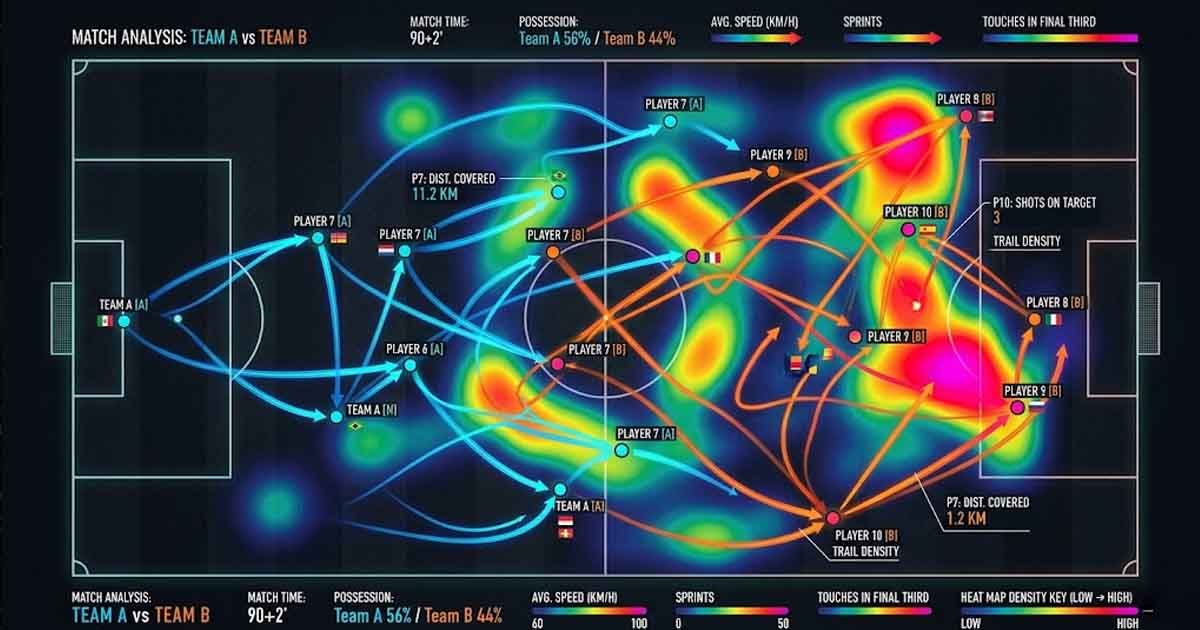
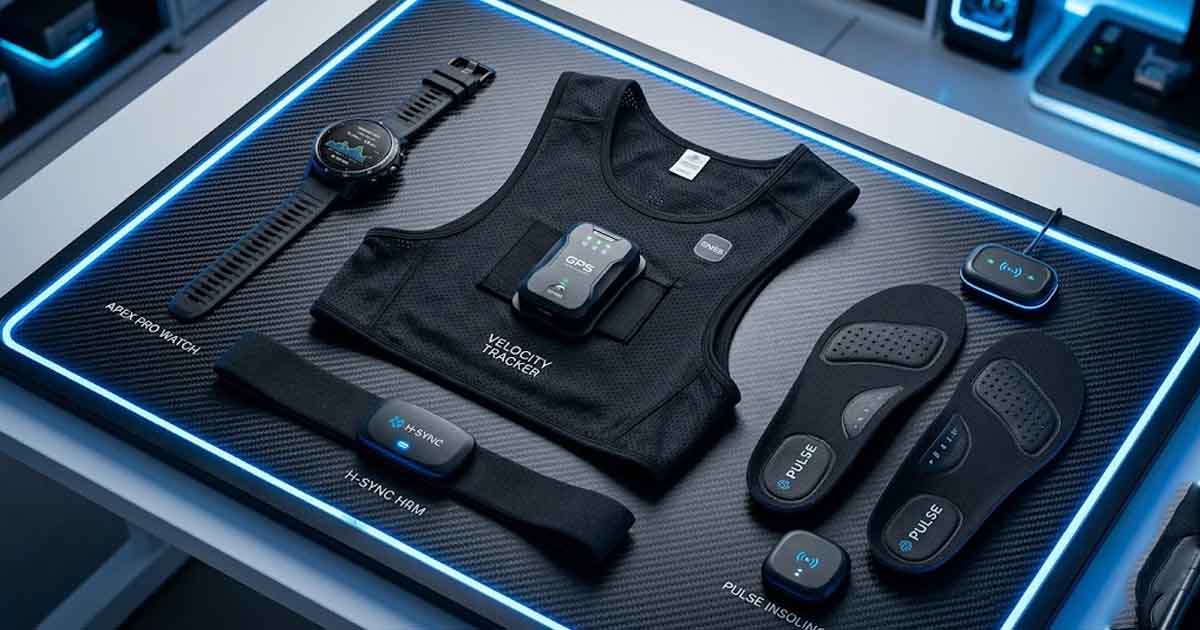
The GPS vest worn by a Premier League footballer during training generates approximately 1,000 data points per second: positional coordinates, velocity vectors, acceleration and deceleration profiles, heart rate, and increasingly, from newer inertial measurement units integrated into the same device, movement quality metrics including joint loading estimates and impact forces. Across a 90-minute training session involving 25 players, the dataset generated is enormous by any analytical standard. The question that has preoccupied sports scientists for the past five years is not how to collect this data — that problem is largely solved — but how to extract actionable insight from it efficiently enough to inform the decisions that matter.
From Data Collection to Actionable Intelligence
The gap between data collection and actionable intelligence is where most sports technology implementations succeed or fail. Organisations that have successfully converted wearable data into genuine performance advantages share a common approach: they identified a small number of specific questions they wanted the data to answer, built analytical workflows optimised for those questions, and created clear decision protocols specifying what action follows from each possible data outcome.
The most consistently valuable applications in 2026 follow this focused approach. Load management — monitoring the relationship between recent acute training load and established chronic load to maintain the acute:chronic workload ratio in the injury-protective zone — is the application with the strongest evidence base and the most widespread effective deployment. The data requirements are well-understood, the analytical models are validated, and the decision protocols (load modification when ACWR exceeds defined thresholds) are clear. Programmes that have implemented this application systematically demonstrate measurable reductions in overuse injury rates that translate directly to player availability improvements.
Fatigue monitoring — identifying individual athletes whose physiological markers suggest accumulated fatigue that increases injury risk and impairs performance — is a more complex application but one where the technology has matured significantly. The combination of GPS-derived performance metrics (declines in maximum sprint speed, reduction in high-speed running distance, changes in acceleration capacity), heart rate variability measurements, and subjective wellness data provides a multi-signal fatigue picture that is more reliable than any single measurement and captures the full physiological and psychological fatigue burden.
The New Generation of Wearable Devices
The wearable technology landscape in 2026 has moved beyond GPS vests and heart rate monitors into devices that capture previously inaccessible physiological information. Continuous lactate monitoring — devices that measure blood lactate continuously from interstitial fluid through minimally invasive patches — has reached commercial deployment in elite sport contexts, providing real-time metabolic intensity information during training that enables precise intensity zone management without the disruption of blood sampling. The ability to train precisely within defined metabolic zones — rather than using heart rate as an imperfect metabolic proxy — represents a significant advance in training precision for endurance athletes.
Continuous core temperature monitoring, using ingestible capsule sensors that transmit temperature data wirelessly, is standard practice in elite endurance programmes operating in hot conditions. The ability to track individual athletes' core temperature in real time during training and competition enables personalised heat management interventions — directing cooling resources to the athletes approaching dangerous thresholds rather than applying generic cooling protocols uniformly.
Smart clothing — garments with embedded sensors that measure movement quality, muscle activation patterns, and joint kinematics — is in commercial deployment for several specialist applications including sprint biomechanics monitoring and swimming stroke analysis. The measurement quality of current consumer-grade smart clothing is still below that of laboratory motion capture, but the ecological validity advantage — measuring athletes in natural training and competition environments rather than constrained laboratory conditions — makes smart clothing data complementary to rather than simply inferior to laboratory measurement.
The Data Governance Challenge
As wearable technology generates increasingly sensitive physiological data about athletes, the governance questions around data ownership, access, and use have become urgent. Who owns the data generated by an athlete's wearable device — the athlete, the club, the technology provider, or some combination? Who can access it, for what purposes, and for how long? Can it be used in contract negotiations, insurance assessments, or transfer decisions in ways the athlete has not explicitly consented to? These questions are being answered inconsistently across jurisdictions and organisations, creating significant athlete protection gaps that players' associations and regulators are beginning to address with increasing urgency.
The Return on Investment Evidence
Sports technology investment decisions are increasingly driven by documented return on investment rather than technology enthusiasm. The ROI case for wearable technology in elite team sport — measured in terms of reduced injury costs and improved player availability — is now well-established. Research across multiple professional leagues has quantified the financial value of injury prevention enabled by load monitoring, with figures consistently in the range of multiple times the annual technology investment cost. For organisations paying premium wages to valuable athletes, preventing even one significant injury per season that would have been prevented by better load management recovers the annual technology cost many times over.


Add a Comment